

Season 10/Collab Lab 72
What’s possible when we engage K-12 students directly in conservation and restoration efforts?
The Society for Conservation Biology North America (SCBNA), in collaboration with the Midwest-Great Lakes Chapter of the Society for Ecological Restoration (SER-MGL) will co-host the North American Congress for Conservation & Restoration in Milwaukee this summer. (You can thank Collab Lab regular and Director of Operations & Programs for SCBNA Bernie Traversari for that.) In our December Collab Lab we’ll explore opportunities for K-12 students and teachers to engage directly in conservation and restoration efforts, how that work might be shared at the Congress, and how the presence of the Congress in Milwaukee might be leveraged to create new or expanded opportunities.
As always, you’ll be joined by peers and collaborators from K-12 higher education, industry, and the nonprofit community. If you work with or know of a student who would like to join the discussion, please extend the invitation.
Agenda
5:30 to 6:00 pm Grab something to eat and meet someone new
6:00 to 6:20 pm Welcome and introductions
6:20 to 8:15 pm Let’s explore some possibilities
8:15 to 8:30 pm Wrap up and next steps
Featured Participants
Bernie Traversari — Director of Operations and Programs, Society for Conservation Biology North America & STEM Education Consultant
 Bernie’s background includes research in developmental ecology and amphibian conservation and positions in nonprofit leadership, community outreach, and science education. Before joining SCBNA, Bernie served as the Director of Science Outreach at Edgewood College in Madison, WI, where he led the development and implementation of community-based science education programs for underrepresented communities across the state. He is also Board Vice President of the Urban Learning Collaborative, a Milwaukee-based nonprofit aimed at training the next generation of K-12 educators. Bernie is passionate about connecting scientists with community leaders, grassroots organizations, and students of all ages through his role at SCBNA, all in an effort to protect our natural world. Bernie received a B.S. in Biology from Trinity University in San Antonio, TX, and an M.S. in Biology from Washington State University. Born and raised in Quito, Ecuador, he now lives and works in Milwaukee, WI with his wife and their cat.
Liz Sutton — Outreach Manager, UW-Milwaukee School of Freshwater Sciences
 The School of Freshwater Sciences at the University of Wisconsin-Milwaukee is the largest water focused academic research institute on the Great Lakes and the only North American school of higher education solely dedicated to freshwater issues. The School trains the next generation of freshwater professionals and advances strategic science to inform policy, improve management, and promote the health and sustainability of the Great Lakes and freshwater systems worldwide. Liz has spent her career working to engage and inspire young people through STEM and environmental science education. In 2008 she transitioned into higher education, working as the Assistant Director and STEM Specialist for UWM College for Kids before developing a formal outreach department within the School of Freshwater Sciences with her at the helm.
Halley Minser — Restoration Ecologist, Milwaukee County Parks
Halley is a restoration ecologist with Milwaukee County Parks, where she specializes in the control of invasive species, surveying plant populations, establishing native plantings, and monitoring bumble bee populations, among other activities. She particularly enjoys taking time to appreciate plant-pollinator interactions.
Halley’s work is driven by a passion for preserving native biodiversity and giving a voice to the natural world which cannot speak for itself. She understands the importance of community engagement and fostering a love of nature from a young age, believing that empowering young people with knowledge about the natural world is crucial to fostering a generation of environmentally conscious citizens.
Chris Young — Program Director, Conservation & Environmental Science, UW-Milwaukee
 Chris Young has been teaching biology, environmental history, conservation, and natural history for over 25 years, starting in Minnesota, then Oregon, and now in Milwaukee at Alverno College, the Urban Ecology Center, and most recently at UW-Milwaukee. He is the director of the Conservation and Environmental Science program at UWM. His main project is to explore how people learn to become naturalists, that important space between becoming a scientist and examining our human connection to the natural world. He earned a Ph.D. in the History of Science and Technology from the University of Minnesota.
About the Congress for Conservation & Restoration
SCBNA’s North American Congress for Conservation Biology is the premier gathering of the region’s conservation community and serves as a leading forum for presenting the latest conservation research and practice to address today’s conservation challenges. This event brings together conservation professionals and students working across a wide variety of disciplines and institutions for discussion, innovation, and opportunities in science under the theme Conservation & Restoration for People & Nature.
By bringing together SCBNA and SER-MWGL Chapter, this Congress fosters interdisciplinary collaboration at a critical time for conservation and restoration science. Milwaukee’s historical and ongoing efforts to restore the Milwaukee River, revitalize green spaces, and protect its freshwater resources mirror the Congress’s mission to integrate science, practice, and community engagement. The city’s blend of ecological resilience, cultural vibrancy, and collaborative conservation initiatives underscores the importance of solutions that serve both people and nature. Attendees will have the unique opportunity to engage with local and global experts, share best practices, and contribute to shaping a more sustainable and equitable future for ecosystems and communities alike.
The Congress will take place from July 12-16th at the Baird Center.
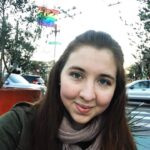 Lauren coordinates the
  Joseph began working for the City of Milwaukee in 2015, coordinating the
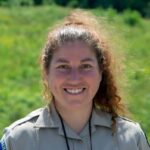 Angela is the superintendent of the Milwaukee State Parks Work Unit for the Wisconsin Department of Natural Resources. In her current position, she oversees Havenwoods State Forest, Lakeshore State Park and Hank Aaron State Trail. Primarily stationed out of Havenwoods, she has a background in conservation and environmental science, biophysics, and secondary science education. Prior to her current role, she was the park manager for Lakeshore State Park and Hank Aaron State Trail, and a teacher at Milwaukee High School of the Arts. She takes pride in ensuring quality recreational, community and educational offerings, along with supporting native habitat restoration and green career initiatives in Milwaukee.