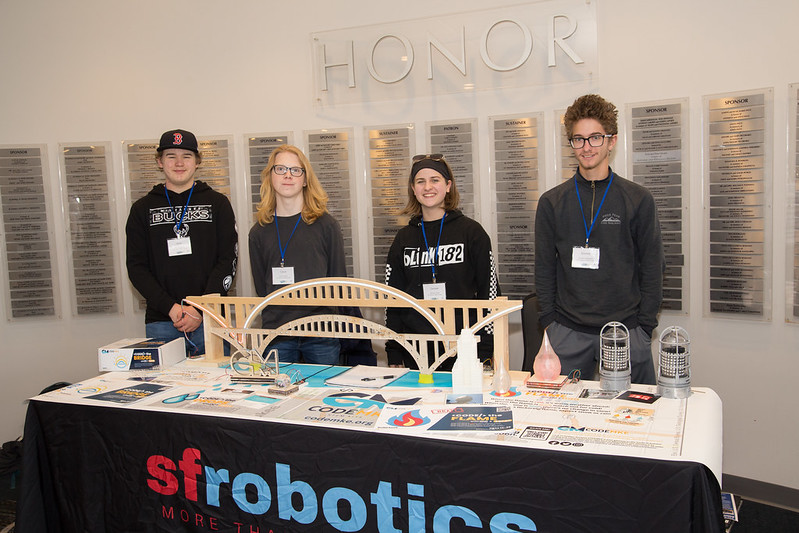
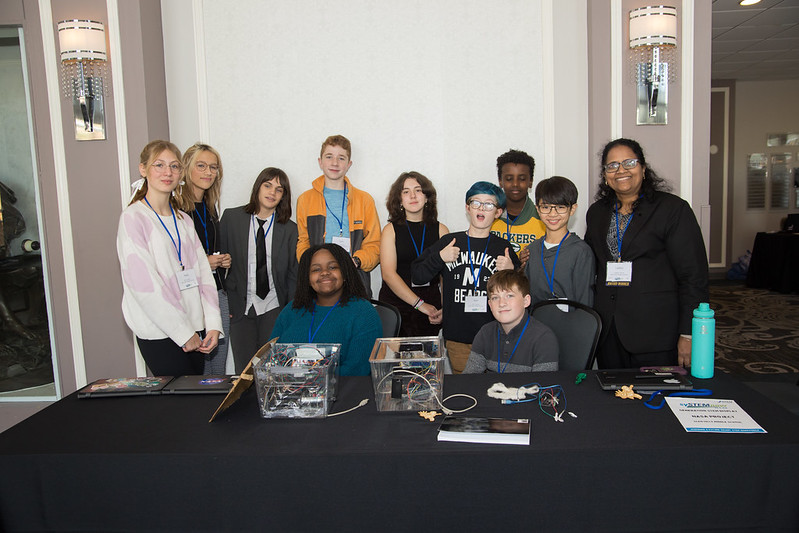
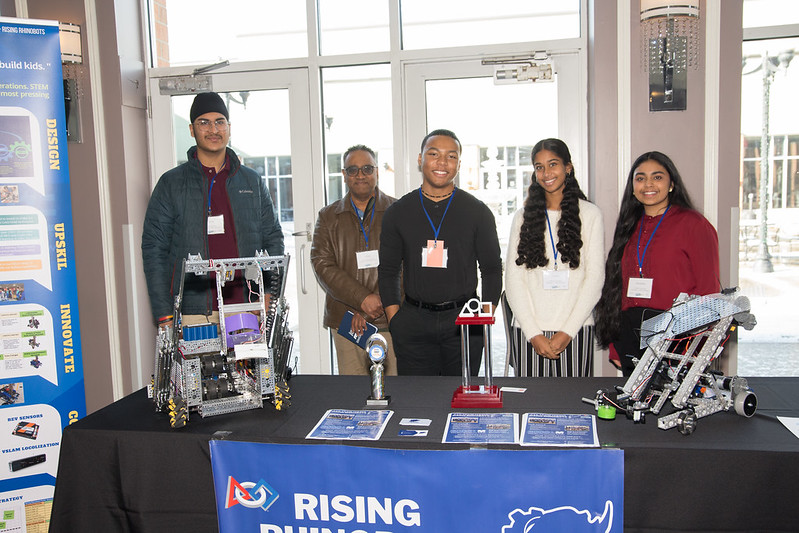
A few weeks ago we closed out our 10th year of Collab Labs with a session at UWM focused on TRUE Skool’s Legacy Project to develop a new campus for their programming, with youth engaged in all phases of that effort. That session was led by a team of UWM students as the capstone project for Ed Policy 609 – Community Partnerships, which used our spring Collab Labs as a focal point of their work. In the background, a second team of students from the class was exploring the role Collab Labs play for attendees and what shape they might take going forward. As many of you know, after 35 years in Milwaukee, I moved to Duluth during the pandemic with the birth of a first grandchild. With schools shut down, we ran the series on Zoom (for a much smaller audience) over the 2020-21 school year, before returning to in-person sessions in a new home at MSOE’s STEM Center. Joost’s cancer was diagnosed midway through our 9th season. As it progressed , we planned this year’s Collab Labs with a series of partners who help guide and facilitate the sessions, and started thinking about what the future of Collab Labs might look like. With his passing, and a seven hour commute from Duluth for me, it’s time to figure out where Collab Labs head from here. Some Context It might help to offer a little context. We started Learn Deep with the recognition that despite enthusiasm for offering students a richer set of experiences among both educators and potential partners in industry, higher-ed, and others in the broader community, those who wanted to see a change, often operated within their own narrow silos. The lack of visibility among those willing to collaborate and the friction required to overcome it, meant good ideas went forward with limited support and narrowed views of what was possible. We saw Collab Labs as a venue to bring educators together with community partners, explore where passions and goals align, and uncover opportunities for collaboration– a way create the the missing connections and reduce the friction of collaboration. It’s through working together in support of aligned goals that we build the relationships and trust necessary for true collaboration. It’s how we remove the friction inherent in collaboration within or across organization boundaries. It is how we learn more about the capabilities partners bring, and what it takes to work effectively together, and see new possibilities. Nothing interesting happens in a classroom without a teacher willing to say yes, so since our inception, we’ve focused on helping teachers build connections, explore opportunities, and take on new challenges. Collab Labs have played a central role in all of that. When the Ed Policy class got going this spring, I put together a Kumu map (pictured above) to illustrate the role Collab Labs have played in building the relationships, programs, projects, and experience that allowed us to pull together our current collaboration with UWM Mathematics faculty, STEAM Milwaukee, the Wisconsin Out of School Time Alliance (WOSTA) and TRUE Skool. It’s a story of what becomes possible through 10 years of building relationships, testing out possibilities, and seeing connections. It’s a story of the impact the simple act of getting educators in the same room with folks from the broader community can have. (Since I put the Kumu map together in February, our Collaboration with TRUE Skool has been central to two more Collab Labs, and with them, new sets of partners, projects, and opportunities. The connections, relationships and possibilities continue to grow.) We ran our first Collab Labs in August of 2016 as experiments, first with a small group of teachers, followed a week later with a small group of school leaders. We took what we learned from those efforts to put together Collab Lab 3 and the structure which has become familiar to participants since then: Focus the discussion on a topic of interest Recruit featured participants from education, industry, higher-ed, and nonprofits who can offer a unique or useful perspective Keep it free and open and serve tasty food Provide room for participants to be heard and to hear the goals and passions of their fellow attendees Lay the groundwork for something to move forward I pulled together some stats as we wrapped up this season. Across the 76 Collab Labs we have run since 2016, we’ve been joined by more than 800 participants representing 300+ organizations — schools, companies, higher-education and cultural institutions, nonprofits, and state and local governments. Those conversations and connections spawned more 40 projects connecting educators with community partners, and brought in the support and engagement of another 300 professionals and more than 400 students enrolled at UWM, MSOE, Marquette, MATC, and MIAD as clients, collaborators, and mentors. I can only guess at the numbers of K-12 students impacted by this work, but between what educators and partners have brought back from Collab Labs to the students they work with and the projects where we’ve been directly involved, it’s safe to say we are well into the thousands. Mapping only educators and professionals the connections between Collab Labs, Projects, and People illustrates the role of Collab Labs as the entry point to a rich network of folks working to offer students something more. What the Ed Policy 609 Team Found The Ed Policy team interviewed a number of Collab Lab attendees from both inside and outside of K-12, some who attend on a regular basis, and others who’ve come more sporadically. Here’s what they heard: The Value Collab Labs Provide Cross-Sector Networking and Breaking Down Silos Collab Labs fill a distinct gap in Milwaukee by serving as one of the only consistent spaces where individuals from education, nonprofits, businesses, and the broader community share the same room. Attendees value stepping outside their normal everyday circles to build relationships with people they might not otherwise meet. They appreciate finding other “catalysts” who are seriously engaged in thinking about teaching, learning, and more….