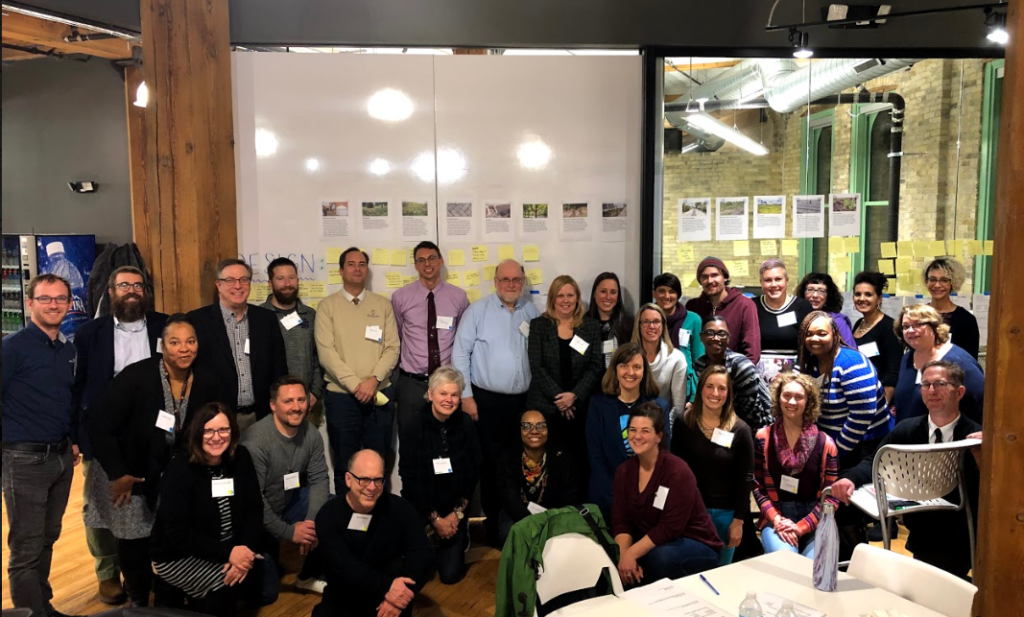
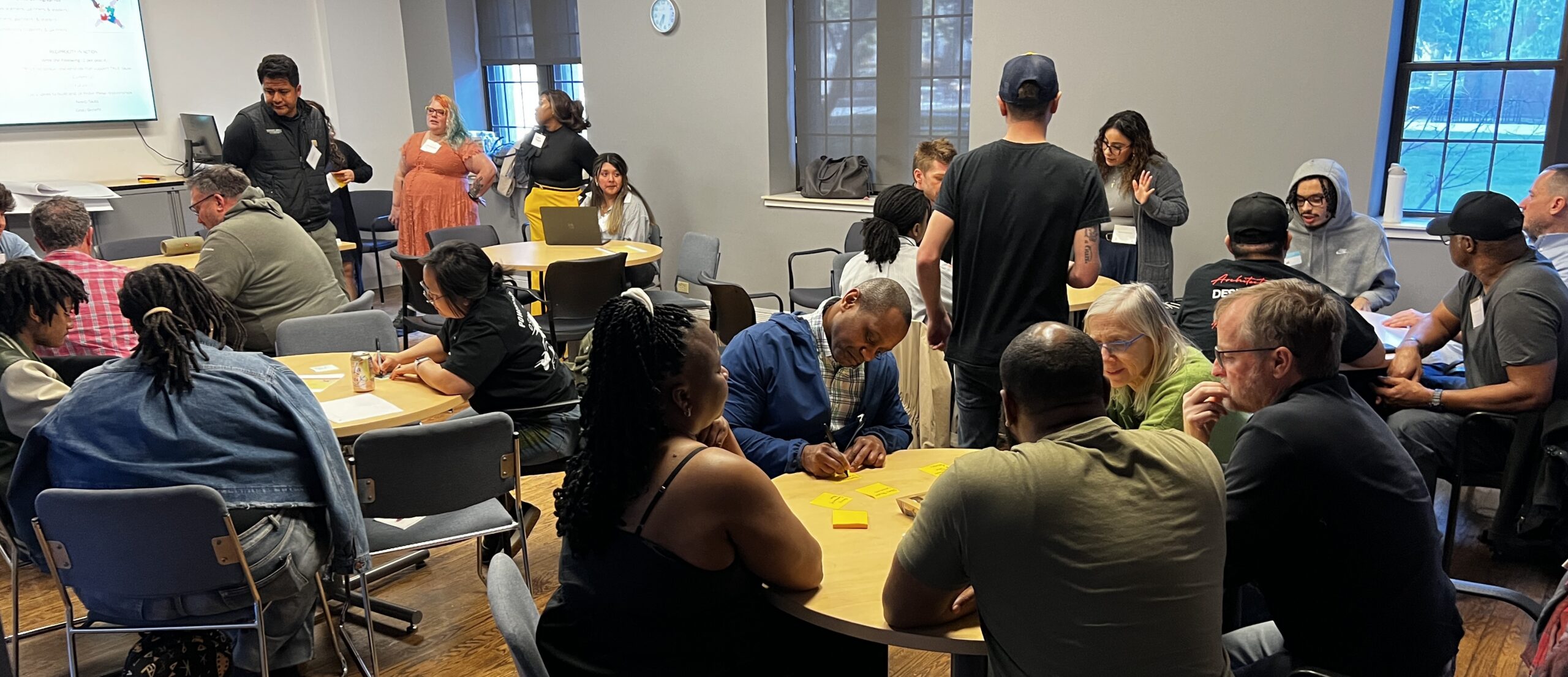
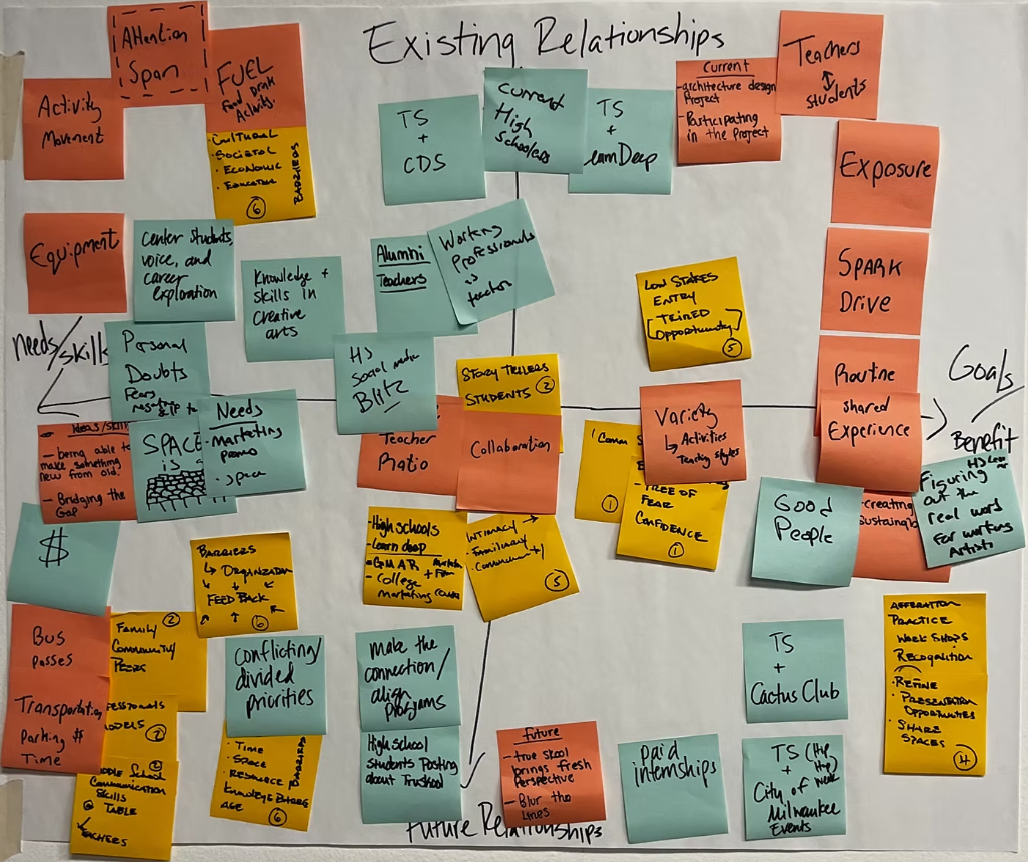
 A few weeks ago we closed out our 10th year of Collab Labs with a session at UWM focused on TRUE Skool’s Legacy Project to develop a new campus for their programming, with youth engaged in all phases of that effort. That session was led by a team of UWM students as the capstone project for Ed Policy 609 – Community Partnerships, which used our spring Collab Labs as a focal point of their work. In the background, a second team of students from the class was exploring the role Collab Labs play for attendees and what shape they might take going forward.
As many of you know, after 35 years in Milwaukee, I moved to Duluth during the pandemic with the birth of a first grandchild. With schools shut down, we ran the series on Zoom (for a much smaller audience) over the 2020-21 school year, before returning to in-person sessions in a new home at MSOE’s STEM Center. Joost’s cancer was diagnosed midway through our 9th season. As it progressed , we planned this year’s Collab Labs with a series of partners who help guide and facilitate the sessions, and started thinking about what the future of Collab Labs might look like. With his passing, and a seven hour commute from Duluth for me, it’s time to figure out where Collab Labs head from here.
Some Context
It might help to offer a little context. We started Learn Deep with the recognition that despite enthusiasm for offering students a richer set of experiences among both educators and potential partners in industry, higher-ed, and others in the broader community, those who wanted to see a change, often operated within their own narrow silos. The lack of visibility among those willing to collaborate and the friction required to overcome it, meant good ideas went forward with limited support and narrowed views of what was possible. We saw Collab Labs as a venue to bring educators together with community partners, explore where passions and goals align, and uncover opportunities for collaboration– a way create the the missing connections and reduce the friction of collaboration.
It’s through working together in support of aligned goals that we build the relationships and trust necessary for true collaboration. It’s how we remove the friction inherent in collaboration within or across organization boundaries. It is how we learn more about the capabilities partners bring, and what it takes to work effectively together, and see new possibilities. Nothing interesting happens in a classroom without a teacher willing to say yes, so since our inception, we’ve focused on helping teachers build connections, explore opportunities, and take on new challenges. Collab Labs have played a central role in all of that.
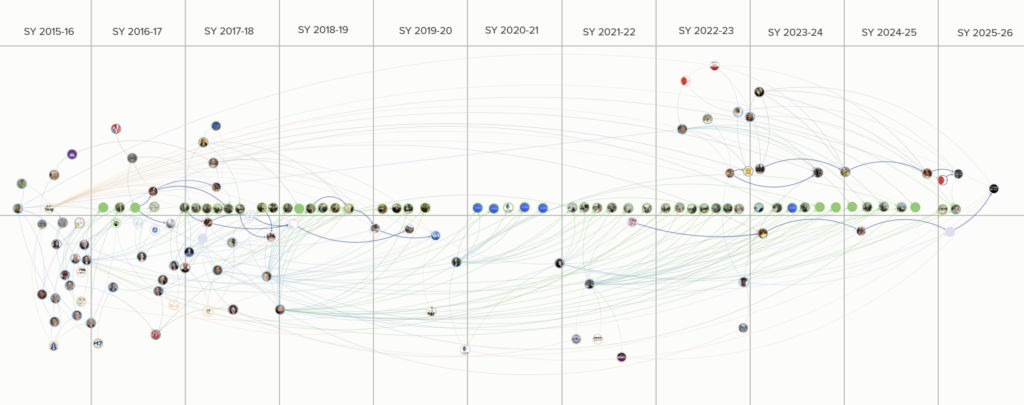
When the Ed Policy class got going this spring, I put together a Kumu map (pictured above) to illustrate the role Collab Labs have played in building the relationships, programs, projects, and experience that allowed us to pull together our current collaboration with UWM Mathematics faculty, STEAM Milwaukee, the Wisconsin Out of School Time Alliance (WOSTA) and TRUE Skool. It’s a story of what becomes possible through 10 years of building relationships, testing out possibilities, and seeing connections. It’s a story of the impact the simple act of getting educators in the same room with folks from the broader community can have. (Since I put the Kumu map together in February, our Collaboration with TRUE Skool has been central to two more Collab Labs, and with them, new sets of partners, projects, and opportunities. The connections, relationships and possibilities continue to grow.)
We ran our first Collab Labs in August of 2016 as experiments, first with a small group of teachers, followed a week later with a small group of school leaders. We took what we learned from those efforts to put together Collab Lab 3 and the structure which has become familiar to participants since then:
- Focus the discussion on a topic of interest
- Recruit featured participants from education, industry, higher-ed, and nonprofits who can offer a unique or useful perspective
- Keep it free and open and serve tasty food
- Provide room for participants to be heard and to hear the goals and passions of their fellow attendees
- Lay the groundwork for something to move forward
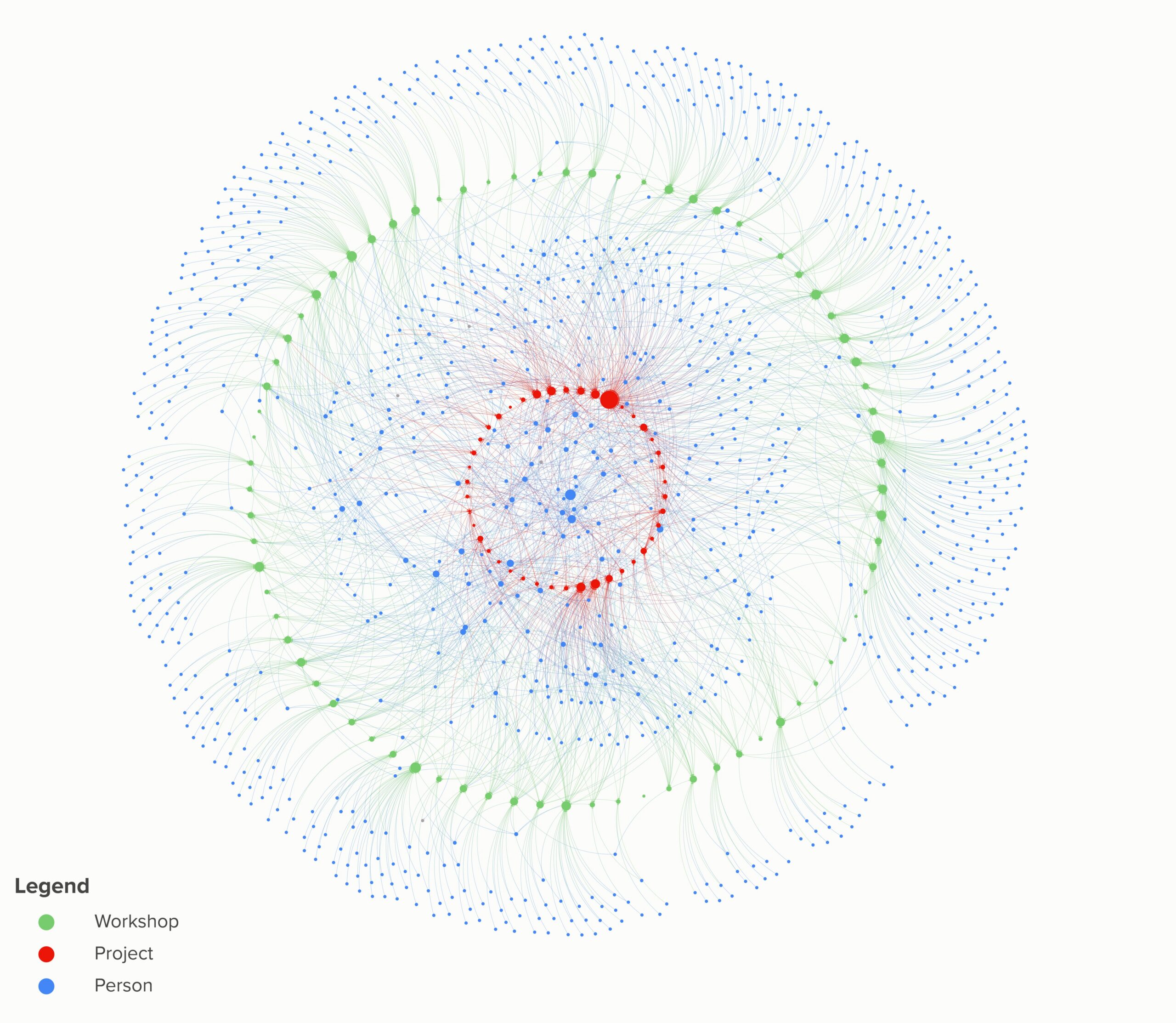
I pulled together some stats as we wrapped up this season. Across the 76 Collab Labs we have run since 2016, we’ve been joined by more than 800 participants representing 300+ organizations — schools, companies, higher-education and cultural institutions, nonprofits, and state and local governments. Those conversations and connections spawned more 40 projects connecting educators with community partners, and brought in the support and engagement of another 300 professionals and more than 400 students enrolled at UWM, MSOE, Marquette, MATC, and MIAD as clients, collaborators, and mentors. I can only guess at the numbers of K-12 students impacted by this work, but between what educators and partners have brought back from Collab Labs to the students they work with and the projects where we’ve been directly involved, it’s safe to say we are well into the thousands. Mapping only educators and professionals the connections between Collab Labs, Projects, and People illustrates the role of Collab Labs as the entry point to a rich network of folks working to offer students something more.
What the Ed Policy 609 Team Found
The Ed Policy team interviewed a number of Collab Lab attendees from both inside and outside of K-12, some who attend on a regular basis, and others who’ve come more sporadically. Here’s what they heard:
The Value Collab Labs Provide
Cross-Sector Networking and Breaking Down Silos
- Collab Labs fill a distinct gap in Milwaukee by serving as one of the only consistent spaces where individuals from education, nonprofits, businesses, and the broader community share the same room.
- Attendees value stepping outside their normal everyday circles to build relationships with people they might not otherwise meet. They appreciate finding other “catalysts” who are seriously engaged in thinking about teaching, learning, and creativity.
- Educational and community work can often feel individualistic or overwhelming; attendees share that the collaborative environment helps them feel less isolated and reminds them they are part of a larger supportive community.
Fostering Creativity and Practical Learning Models
- Attendees highlight that the nonjudgmental, flexible structure allows them to think creatively, share ideas freely, and experiment without the fear of failure.
- Teachers appreciate how the labs emphasize hands-on, project-based learning styles. They find the environment critical for learning how to keep students motivated and help them apply academic knowledge to real-world situations.
- The collaborative engagement has been eye-opening, with opportunities to talk with individuals from diverse backgrounds, think and reflect more deeply about their own practices and what might be possible.
Resource Sharing and Community Awareness
- Teachers appreciate being able to break out of their institutional silos to build a network of professionals they can directly tap.
- For informal educators and community partners, the labs provide a platform for active listening, allowing them to better understand both the struggles teachers face and what they hope to offer their students.
- Educators value the ideas and solutions which come out of Collab Lab discussions that they can take back to their own schools.
Looking Forward
The team also provided a number of suggestions for what a sustainable model might look like going forward:
Shifting to a Shared Leadership and Distributed Governance Model
There was broad consensus around evolving toward a shared governance model where responsibility for planning and facilitation is distributed across multiple participating organizations. In practice, this might involve rotating facilitators, community-sourcing session topics, and embedding a peer-mentorship structure where veteran participants guide newcomers. It was also suggested that we identify and designate internal champions within partner institutions to intentionally drive and sustain attendance from within their respective organizations.
Facilitation
Some of the interviewees noted that sessions have occasionally become unfocused or frustrating, without strong direction. As the team looks at a evolving to a shared leadership structure one suggestion is to develop a facilitator training model. This training could function as a professional development, creating a new leadership pipeline.
Scheduling, Access, and Logistics
With a few exceptions for special sessions or to align with other events, Collab Labs have been held on the 2nd Thursday of the month. While the time frame doesn’t work for everyone, our thought has been that a regular cadence makes it easier for regular attendees to plan around. By and large, the team favors more flexible scheduling, alternating the days or times for sessions across a series. They also suggest aligning select Collab Labs directly with school districts’ existing professional development days or other initiatives so that attendance feels like an extension of an educator’s core duties rather than an added burden. Transportation times can always get in the way, particularly for students who may want to attend. The team’s suggestions include rotating host locations based on the topic, allowing the labs to travel to different schools, introducing hybrid/virtual attendance options, and providing alternative transportation for participating students.
Formalizing Institutional Partnerships
Much of what we’ve pulled together over the years has come from informal relationships with educators and community partners. The team recommends a shift to building formalized commitments with community systems and institutions. This would include establishing concrete co-hosting agreements with K-12, university, industry, or nonprofit partners. With a rotating set of host sites willing to absorb the logistical responsibility and cost of providing food and drinks for attendees, the organizational overhead could be more widely distributed
Establishing Continuous Engagement and Actionable Impact
The team recommends a shift from standalone meetings toward a framework of continuous engagement. This would include building bridging mechanisms between sessions, such as secondary follow-up meetings, or smaller project-based working cohorts. They’d like to see Collab Labs explicitly connect the high level discussions of the sessions to tangible, actionable initiatives so that participants see the direct impact of their collaborative efforts.
Implementing Evaluation Systems and Tangible Incentives
To track growth and more quickly adapt, the team suggests introducing formal feedback structures—such as post-session surveys and reflection circles—to capture participant input. Gathering these qualitative reflections and success stories would also allow us to document the social and educational impact of Collab Labs to potential funders. They also suggest developing structural incentives to guarantee robust educator participation, such as partnering with district leaders to offer formal paid service hours to teachers who attend Collab Lab sessions.
So Now What?
The work of the Ed Policy 609 team confirmed a lot of what Joost and I have talked about over the the years in terms of both what works, and the shifts we ought to explore. Some conversations around the future of Collab Labs have already started, and those will continue over the summer. I think the strongest possibility follows the shared governance recommendations of the team– e.g. pull together a set of partner institutions who might each host a session. Ideally, they would do so in collaboration with one or more schools or youth serving organizations where the sessions could help further the ideas or projects educators and their students want to pursue. I’m also intrigued by the idea of developing a talent pipeline for facilitating sessions. For pre-service teachers helping to organize and run a Collab Lab could be a great way to understand what they are likely to encounter as educators while building a professional network of individuals within and beyond K-12 with a predisposition to help.
If you’d like to help figure out what this could look like or have another idea for how Collab Labs might be offered, let me know. We have the summer to figure something out.
Thanks
I’m grateful for Ben Trager’s willingness to engage his Ed Policy 609 students (Naiya Gairy, Torrance Harris, Yasmeen Mahmoud, Tyrone Richmond, Megan Shannon, Wassegahming Two Thunders, and Ella Willison) in this work and their contributions of towards the recommendations noted above. Thanks also to those who made themselves available to meet with Ben’s students.
Most of all, thanks to all who have joined us at Collab Lab, connected us with someone new, suggested a topic, or helped us plan and run a session. It’s your engagement that made Collab Labs what they have been, and it has been a privilege to see what has come out of those efforts.
— Pete
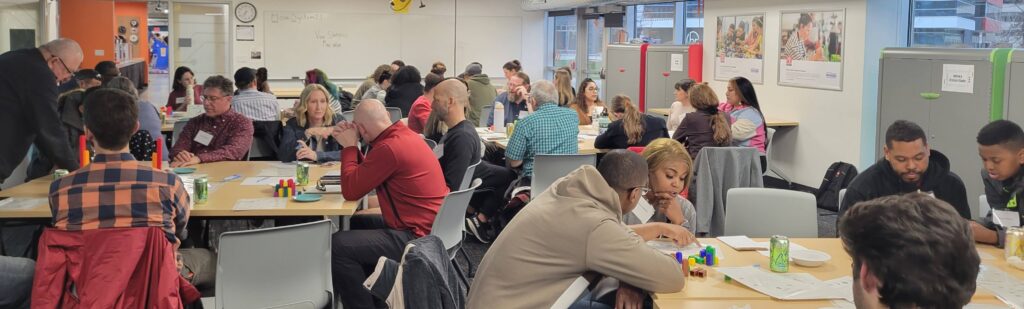
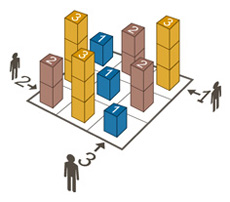 We began the session with a chance for participants to try their hands at solving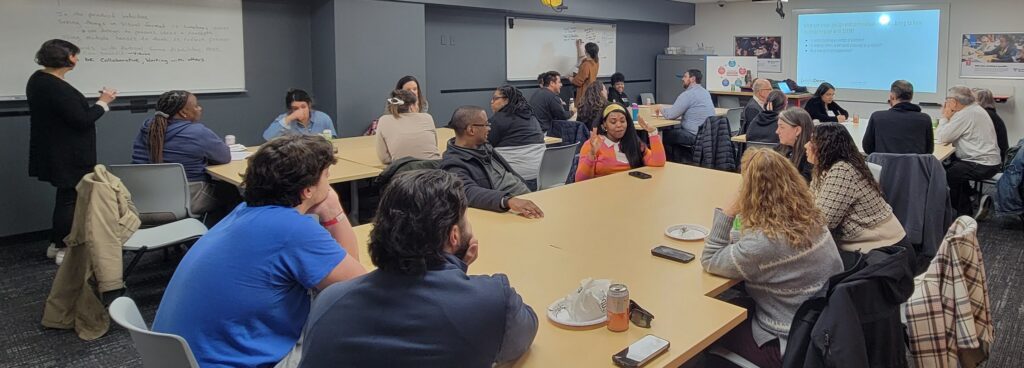
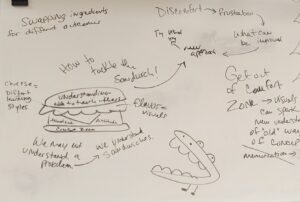 Across our discussion groups, several themes emerged:
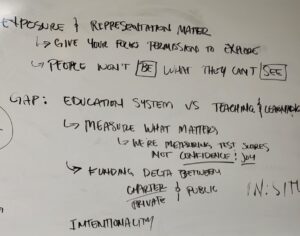 Here too we saw some interesting themes emerge:
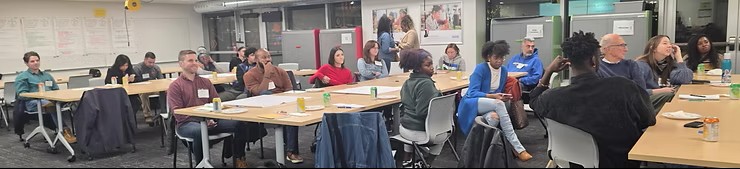 Our November Collab Lab explored how
 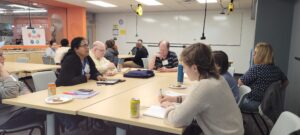 Our tenth season of Collab Labs kicked off last week with a session co-hosted with Adriana Vázquez, Director of Education & Public Programs, and Maisie Buntin, Outreach Programs Coordinator for the Milwaukee Public Museum. Every year, the Milwaukee Public Museum hosts its annual BioBlitz, a 24-hour event where scientists survey the biodiversity in a park or natural area. Our session focused on a nagging issue for Adriana and Maisie– BioBlitzes don’t happen during the school year, so the museum misses opportunities to engage school audiences.