Capacity Building as an Outreach Strategy
The Freshwater Collaborative of Wisconsin’s mission to advance freshwater education and research relies on attracting and developing talented individuals who are passionate about water science. The conventional approach to community outreach is traditionally focused on the delivery of programming — offering experiences or content to K-12 teachers and students through curriculum, site visits, summer camps, or other activities.
We worked with the Freshwater Collaborative to use our December Collab to explore a different approach. We view teachers, students, and schools not simply as recipients of programming, but as potential partners that can support and extend the work of Freshwater Collaborative members. This model empowers K-12 schools to become active partners in research and education, creating experiential learning opportunities that benefit both students and researchers.
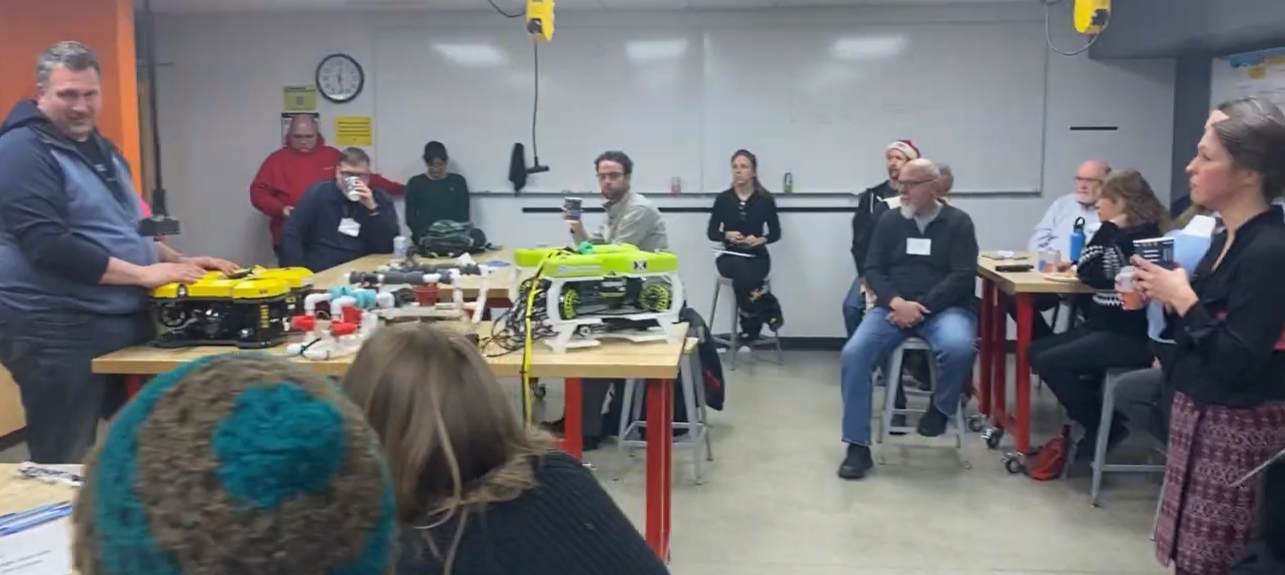
To provide a concrete basis from which to explore this approach to engagement, we framed the discussion around a budding collaboration between Dr. Ashley Lemke, an underwater archeologist working out of UWM’s School of Freshwater Sciences, and Peter Graven, a middle school science and high school robotics teacher from St. Francis. Over the past several years, his students have developed underwater ROV’s of increasing sophistication. The immediate opportunity is to deploy an ROV in service of Dr. Lemke’s research. The bigger vision is to develop additional capabilities at St. Francis and other schools to serve the specific needs of FCW researchers and its partners.
Discussion
The set-up for our discussion centered on a single faculty member working with an individual teacher on a specific project. What came out of that was a number of insights about how and where those efforts could catalyze opportunities for other K-12 teachers and schools, as well as faculty pursuing other research interests.
We split the attendees into four discussion groups, each focused on a different capacity needed to allow a K-12 school, to support research efforts of Dr. Lemke. These included:
- An ability to engineer, prototype, and test components
- An ability to collect images, data, water, and sediment samples
- An ability to provide ongoing monitoring of conditions
- An ability to document findings, tell, and share a story
A fifth set of needed abilities we had not planned to introduce as part of the discussion, was nonetheless covered as part of a broader conversation between discussion groups:
- An ability to deploy, operate, and maintain an ROV
The discussion which followed covered opportunities to directly engage students, the importance of cultivating a sense of wonder, and the importance of soft skills — the ability of students to work effectively as a team to take on any of these challenges.
Across the participants we saw interest and excitement around:
- The types of collaboration that might ensue
- What K-12 students might gain from the experience
- What individual participants or organizations might be able to do to support the efforts of Dr. Lemke and Mr. Graven directly, or to support FCW/K-12 collaboration in another area.
Given the discussion at the Collab Lab and follow-up conversations we see six areas to build upon to validate and scale the approach we’ve suggested, starting in the spring 2025 semester.
- Facilitate the work of Dr. Lemke and Mr. Graven
- Share that story as it evolves
- Identify opportunities for other schools to support this effort
- Identify additional opportunities for collaboration
- Recruit participation from additional K-12 schools
- Understand and document what has enabled this initial collaboration and a path forward to extend the depth and reach of these efforts
Notes From Initial Brainstorming
Ability to engineer prototype and test components
- Teachers need to have a framework/plan to structure students’ learning experiences to develop their design & making skills
- Teachers need to be able to and actually model failure & Learning so that students know what it looks like and what it produces
- Students need self awareness & self management skills to monitor and adjust their emotions to persist and create
- Students need to have practices or skills to stretch their thinking and ideate broadly so their ideas break new ground
- Students need to be able to sketch/model their ideas so they can discuss and make
- Students need to have clarity about the connection between the design and real world application so they can test effectively
- Students need to have multiple experiences of the make-test-revise cycle and feel a sense of accomplishment and to believe there is value in failure
- Students need to be able to see their efforts and failure as a part of a lifelong learning journey so they persist and learn
- Students need to be able to let go of their ideas and take an adversarial approach to find flaws so they can go farther faster
- Students need to develop an appreciation for the discomfort that comes from presenting their ideas, getting, feedback, being wrong, and being uncertain so they remain open to growth
- All parties deal with failure — playing it safe leads to not enough prototyping
Ability to collect images, data, water, and sediment samples
- Modular construction for multiple purposes — right tool for the tasks
- Generalized tool vs specific tasks
- Photography
- Lighting
- High quality camera
- Shutter speed
- Video vs photos
- Coring
- Water Samples
- Sterility, DNA,
- Grabber hand for artifacts
- Mapping
- Endless types of data (interdisciplinarity) to collect. Explore & let the science happen– don’t lock yourself in too soon
- Underwater mechanics important to take into account
- Streamlined
- Multi-perspective
- balanced/shifting balance
- Transform something that works on land to something that works underwater
- Research & Art
- Videography – stabilization of film (See film all too clear film)
- Need to know where you are
- explore/make questions
- Underwater special challenges
- Design thinking
- Project management
- Give up control
- Deal with failure
- Visual thinking
- Resilience
Ability to provide ongoing monitoring
- A Reason Why
- Creativity – draw from other disciplines
- Story purpose
- Community
- Contributing (leads to story)
- Reasons to do it in a certain way — e.g. being scientific
- Model scenarios for winter tests
- simulations
- Drill through pond ice (winter strategy to get out on smaller lakes)
- Big challenge is precise location
- Get practice in an accessible way –virtual simulations, small scale trials
- Data logging
- System for submitting and maintaining data
- Decentralized
- out of silo
- People doing a part of a bigger, longer term effort
- Possibly revolving group with new comers
- Internal story telling to bring in new participants
- Data logging – consistent methods
- What story are we trying to tell?
- Knowing who the community is
- Virtual training/accessibility
Ability to document findings, tell and share a story
- Wonderment
- Speak/voice
- Listen
- Kids speak
- Share a story — kids, teachers, families
- Kids — visual communication/posters/art
- Cyclical feedback/revision
- 37 sec reels [how things work]
- Local pride/trust
- clubs
Ability to operate an ROV
- Put in
- Take out
- Know where I am
- Know what I’m seeing
- Maneuver reliably
- Maintain it
- Clean
- Repair
- Train other operators
- Make use of a test environment to improve skills
A special thanks to our featured guests,
Peter Graven — Science & Robotics, St Francis School District
Marissa Jablonski – Executive Director, Freshwater Collaborative of Wisconsin
Ashley Lemke — Associate Professor – Anthropology, UW Milwaukee
As always, we’re appreciative of MSOE for letting us make use of the NM Lab in the WE Energies STEM Center every month.
Up Next
Collab Lab 66: Engaging Families Thursday February 13th, 5:30 to 8:30 pm at MSOE’s STEM Center
Actively using some form of PBL with your students and looking for ideas or encouragement from others? Consider joining your peers in the inspirED Community.
 Peter teaches 7th and 8th-grade science and high school robotics in the St. Francis School District. Over the past 27 years, he has taught a variety of science and mathematics courses, including Earth and Life Sciences. Graven serves as the lead teacher and mentor for SFROBOTICS, a program that engages students in diverse robotics competitions such as FIRST Tech Challenge, FIRST LEGO League, MATE ROV, and SEAPERCH, as well as in STE(A)M projects with local and global impact, supported by strategic partnerships.
 Marissa is an accomplished water engineer, environmental advisor, and plastics-reduction expert who has worked in more than 45 countries. Her work with The Freshwater Collaborative leverages expertise across 13 University of Wisconsin institutions to lead the global community in addressing freshwater challenges, and advance its mission to:
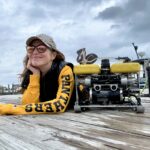 Dr. Lemke is an Anthropological Archaeologist. In addition to her role at UWM, she is the former Chair of the
 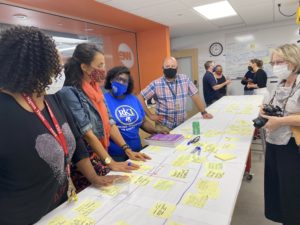 Our Learn Deep Fellows wrapped up the STEM Studio workshop on Friday with a presentation and discussion of their projects to colleagues and program partners. The projects developed over the course of the past two weeks focus on water, but are aimed at the much larger goals the fellows have for their students– that they can see a broad range of career possibilities, that they can see themselves as creators and that they think of themselves as someone who can make a difference in their community. Those three goals led to a sequence of three projects which flow together over the course of the school year.
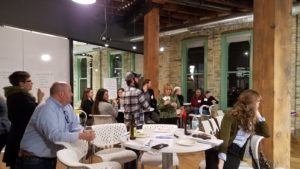 Beyond the facts that Milwaukee sits next to a whole lot of water and spans several watersheds, it is home to more than 200 water technology companies. This creates an opportunity not just to explore physical connections to water and the environment, but to tap into expertise around how water is used and managed. At our February Collab Lab, we pulled together individuals from area organizations engaged water technology and issues from a variety of perspectives. We then sat them down with educators to flesh out some ideas and make the connections that can help bring those ideas to life.